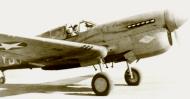
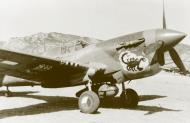
Curtiss P-36 Hawk photo gallery
Curtiss H-81A Hawk - Tomahawk photo gallery
324th Fighter Group Curtiss P-40 Warhawk photo gallery header
Curtiss P-40 Warhawk photo gallery


314th FS  -  315th FS  -  316th FS

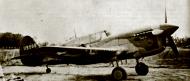
  Curtiss P-40F Warhawk USAAF 41-19988 324FG Western Desert 1943 01

Photo 01: Richard Lander flew this bombed-up P-40F-20-CU for the 324th Fighter Group also in the Western Desert. This late production F carries a radio mast. As evidence by the underwing bombs, the 324th was primarily used for ground support. [D. Lauder]. This plane eventually would be lost on Jun 09 1944 MACR-5833.

  Curtiss P-40F Warhawk 324FG314FS X15 Pilot Robert F Worley 1943

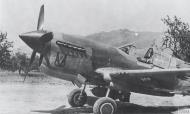
Photo 01: One of the pilots downed on 13 March 1943 was Mai Robert F Worley, the popular CO of the 314th FS/324th FG. He was fortunate to belly-land his P-40F behind enemy lines unhurt and escape, back to Allied territory. The aeroplane, which was retrieved after the battlefront had moved past it, carries the 324th FG prefix V in Ninth Air Force units, numbers 10, 40 and 70 were normally assigned to the COs of the three squadrons within the group.

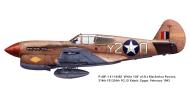
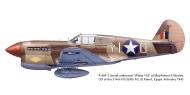
  Curtiss P-40F-1 Warhawk 324th Fighter Group 314th Fighter Squadron 41-14282 White Y20 flown by MacArthur Power out of El Kabrita Egypt 1943

Profile 00: Curtiss P-40F-1 Warhawk 324th Fighter Group 314th Fighter Squadron 41-14282 White Y20 flown by MacArthur Power out of El Kabrit Egypt 1943

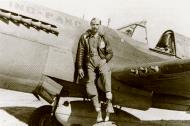
  Curtiss P-40F Warhawk 324FG314FS Y31 Pilot Andrew DAntoni 1943 01

2Lt Andrew A DAntoni of the 314th FS/324th FG taxies a P-40F-1 (possibly White Y31 across a desert landing ground in early 1943. The aeroplane carries a yellow diamond - the 314th FS insignia on the cowling. One of his squadrons original pilots, DAntoni shot down a C.202 on 4 July 1943 for his only confirmed victory (Andrew DAntoni)

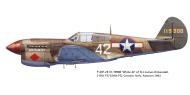
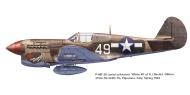
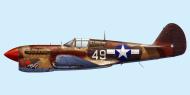
  Curtiss P-40F Warhawk 324FG315FS White 49 Pilot David Giltner Pignataro, Italy 1944 00

Profile 00: P-40F Warhawk operated by 315th Fighter Squadron (324th Fighter Group), Pignataro, Italy Spring 1944 flown by 1st Lt. David L. Giltner. The name Judy appeared on the right side.

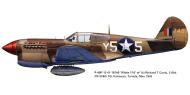
  Curtiss P-40F Warhawk 324FG316FS Y71 named DOT Cao Bon Tunisia June 1943 00

Profile 00: P-40F named DOT 316th Fighter Squadron (324th Fighter Group), Cao Bon Tunisia June 1943

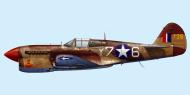
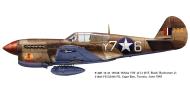
  Curtiss P-40F Warhawk 324FG316FS Y76 Pilot W.S. Buchanan Cao Bon, Tunisia June 1943 00

Profile 00: P-40F USAAF serial number 41-1973, 316th Fighter Squadron (324th Fighter Group), Cao Bon Tunisia June 1943 flown by Lt W.S. Buck Buchanan Jr.

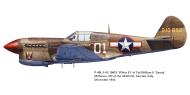
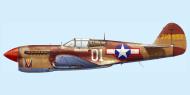
  Curtiss P-40L Warhawk 324FG White 01 Pilot William Bates Cercola, Italy 1943 00

Profile 00: P-40L USAAF serial number 42-10653, 324th Fighter Group white 01 operated out of Cercola, Italy December 1943 and flown by Col. William K. Sandy Bates, commanding the group.

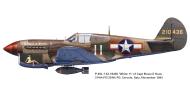
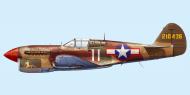
  Curtiss P-40L Warhawk 324FG314FS White 11 Pilot Bruce Hunt Mateur, Tunisia August 1943 00

Profile 00: P-40L USAAF serial number 42-10436 of the 314th Fighter Squadron (324th Fighter Group) based out of Mateur, Tunisia August 1943. Named Duchess of Durham IV and coded white 11 it was flown by Capt. Bruce E. Hunt. The olive drab touch-up has covered the markings of the 325th Fighter Group to which the plane belonged before. Capt. Bruce E. Hunt belly landed this aircraft near Cercola, Italy on Mar 18, 1944. Classified as CAT:4 however after repairs it was involved in a fatal crash near Lake Bolseno, Italy by another 314th Fighter Squadron pilot Roland J Fischer on July 14, 1944.

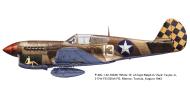
  Curtiss P-40L Warhawk 324FG314FS White 13 Pilot Taylor Tunisia 1943 00

Profile 00: P-40L Warhawk 324FG314FS White 13 Capt. Ralph G Zack Taylor Jr. Tunisia 1943

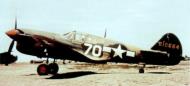
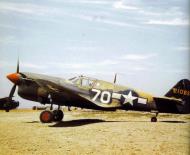
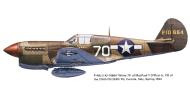
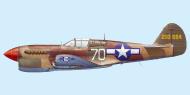
  Curtiss P-40L Warhawk 324FG316FS White 70 Pilot Paul T.O. Pizzi Cercola, Italy August 1944

Curtiss P-40L USAAF serial number 42-10664, 316th Fighter Squadron (324th Fighter Group), Cercola, Italy, spring 1944 flown by Major Paul T.O. Pizzi Jr., commanding the 316th Fighter squadron. This machine had come from the 325th Fighter Group as the olive drab touch up shows and had red wheel discs.

Planes and Pilots: Curtiss P40 Vol 3 From 1939 to 1945.

  Curtiss P-40F Warhawk 41-14581 324FG over Tunisia

Allan Harnest was flying 41-14581 on May 19th when it was shot down by AAA. He was a pilot from the 315th FS flying out of Pignataro. He is remembered on the tablets of the missing at Siciy-Rome American Cemetary. BTW, 41-14581 had just been returned to service following repairs after it had groundlooped at Cercola a couple months before by a 314th FS pilot.

http://www.usmilitariaforum.com/forums/index.php?/topic/14319-curtiss-p-40-warhawk/page-3

  Curtiss P-40F Warhawk 324FG314FS Yellow 10 Robert Worley who evaded capture sd on 12th Mar 1943 01

Photo description: One of the pilots downed on 13 March 1943 was Maj Robert F Worley, the popular CO of the 314th FS/324th FG. He was fortunate to belly-land his P-40F-1 behind enemy lines unhurt and escape back to Allied territory. The aeroplane, which was retrieved after the battlefront had moved past it, carries the 324th FG prefix Y. In Ninth Air Force units, numbers 10, 40 and 70 were normally assigned to the COs of the three squadrons within the group (Howard Levy)

Source: Osprey Aircraft of The Aces 43 - P-40 Warhawk Aces of the MTO by Carl Moleswor Page 45

  Curtiss P-40F Warhawk 324FG315FS White 49 Lt Dave Giltner Pignataro Italy 1944 01

Photo description: 2Lt Robert B ‘Bruce’ Abercrombie of the 64th FS/33rd FG christened his P-40F ‘White 33’ Ginger, and the fighter is seen between sorties at Rocco Bernardo, in Italy, in the Autumn of 1943. Loaded with six 40-lb bombs and a full drop tank, it’s ready for a mission. Note how a dummy fourth gun port has been painted on the wing, and the hubcaps have also been decorated. When the 57th FG converted to P-47s in December 1943, Ginger went to the 315th FS/324th FG, where Lt Dave Giltner flew it as ‘White 49’ Marge/Judy (Bruce Abercrombie)

Source: Osprey Aircraft of The Aces 43 - P-40 Warhawk Aces of the MTO by Carl Moleswor Page 79

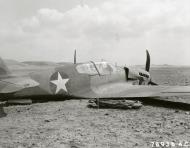
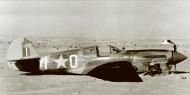
  41-19807 P-40F Warhawk 324FG316FS Dennis L Fleak forced landed at El Saff Egypt 22nd Feb 1943 NA1188

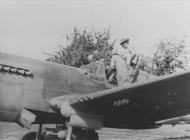
Photo description: A Curtiss P-40 lies deserted after making a forced landing at El Saff, Egypt on 22 February 1943. 21 February 1943: the caption says P-40F 41-19807 of the 316th Ftr Sq, 324th FG "lies deserted" after a forced landing; pilot Dennis L. Fleak bellied her in after an engine failure. Deserted, maybe - but she wasn't completely abandoned. Apparently recovered and repaired, she was being flown by 2LT Donald J. Ellis when the ship suffered catastrophic structural failure on 27 August; Ellis was KIA, two days short of his 20th birthday. The caption does not state 316th FS, 324th FG. This Hawk was repaired and indeed later assigned to that outfit but, at the time of this accident, it was flown by a pilot (Dennis L. Fleak) of the 45th Ferrying Squadron, 19th Ferrying Group.

Photo Source: National Archives Identifier NAID: 204943761 Local ID: 342-FH-3A28112-78938AC

Key Air Battles and Engagements

324th Fighter Group: Overview and WWII Operations

During the Battle of Monte Cassino (January–May 1944), the 324th Fighter Group, operating P-40 Warhawks (primarily F and L models) from bases in southern Italy (Foggia and Cercola), played a pivotal role in supporting the Allied push to break the German Gustav Line. The group’s 314th, 315th, and 316th Fighter Squadrons flew approximately 2,500 sorties during the campaign, with a peak of ~600 sorties during the decisive **May 12–14, 1944**, offensive that led to the fall of Monte Cassino. Pilots conducted dive-bombing, strafing, and air cover missions, targeting German fortifications, artillery, and supply lines. The group’s actions earned a Distinguished Unit Citation (DUC) for precision attacks that crippled German defenses. Pilot diaries, after-action reports, and personal accounts from the USAF Historical Research Agency and secondary sources like *Desert Air War* by Robert F. Dorr provide vivid insights into the chaos, bravery, and challenges faced by P-40 pilots at Cassino.

   Cassino Campaign Context (January–May 1944)

The Cassino Offensive aimed to breach the German Gustav Line, anchored at Monte Cassino’s Benedictine Monastery, a key defensive position. The 324th Fighter Group, under the Twelfth Air Force, flew missions to weaken German artillery, bunkers, and troop concentrations, often under heavy 88mm flak and Luftwaffe opposition (Bf 109s and Fw 190s). From January to May, the group averaged 100–150 sorties daily, escalating to 200–250 during the May 12–14 breakthrough. Missions included low-level strafing (200–500 feet), dive-bombing with 500-lb bombs, and escorts for B-25 and A-20 bombers. Combat reports note P-40s’ six .50-caliber machine guns expended 600–800 rounds per sortie, with 40% of missions using bombs. The group lost ~20 P-40s to flak and fighters, with ~10 pilots KIA/MIA, but claimed 15 aerial kills and 200+ ground targets (vehicles, gun emplacements) during the campaign. Pilot diaries reveal the physical and mental toll of relentless sorties in rugged terrain.

   Peak Mission Days: May 12–14, 1944

The Fourth Battle of Cassino (Operation Diadem) saw the 324th’s most intense action, with ~600 sorties over three days to support Allied ground assaults. Pilots targeted Monastery Hill, German trenches, and supply routes, facing dense flak and occasional Luftwaffe raids. Key accounts from these days include:
- May 12, 1944: Opening Bombardment: ~200 sorties, with the 314th FS dive-bombing German artillery positions. William J. Sloan (315th FS) led a flight of 12 P-40s, dropping 500-lb bombs on Monastery Hill bunkers, destroying 10+ gun emplacements. His diary notes: “Flak so thick you could walk on it—dropped bombs at 300 feet, saw explosions rip the hillside.” Two P-40s were lost to 20mm fire; no aerial kills reported.
- May 13, 1944: Intensified Strafing: ~250 sorties, the campaign’s peak. The 316th FS, led by John F. Rembish, strafed German troop concentrations near Cassino, expending 10,000+ rounds and destroying 30+ vehicles. Rembish’s after-action report describes: “Went in low, 200 feet, tracers everywhere—hit a truck convoy, flames all over.” The 315th FS engaged 6 Bf 109s, claiming 3 kills for 1 loss. Combat logs highlight P-40s diving at 350 mph to evade flak.
- May 14, 1944: Breakthrough Support: ~150 sorties as Polish and British troops captured Monte Cassino. The 314th FS, under Robert L. Coffey Jr., bombed supply lines, destroying 20+ trucks and 5 artillery pieces. Coffey’s diary entry: “Last run felt like suicide—flak burst shook the plane, but we nailed their ammo dump.” One aerial kill (Fw 190) was claimed; no P-40 losses. The DUC citation praises the group’s precision, enabling the Allied advance.
These days accounted for ~25% of the campaign’s sorties, with 70% involving ground attacks. Combat reports note 15–20% mission aborts due to mechanical issues (sand-clogged filters, overheating Merlin engines).

Pilot Stories and Diary Excerpts

Pilot diaries and personal accounts, preserved in archives like the Army Air Corps Museum and USAF Historical Research Agency, offer intimate glimpses into the Cassino experience. These narratives, often scrawled in logbooks or letters, capture the intensity, fear, and camaraderie of P-40 pilots facing relentless missions.
- William J. Sloan (315th Fighter Squadron): An ace with 12 kills, Sloan’s journal (archived at the Museum of Flight) details May 12, 1944: “Led the boys in at dawn—Cassino looked like hell itself, smoke and shells. Dropped bombs dead-on but took a hit in the wing. Barely made it back.” He describes exhaustion after three sorties daily, with P-40s shaking from flak bursts. Sloan’s leadership during Cassino earned a Silver Star; he survived 150+ missions.
- Robert L. Coffey Jr. (314th Fighter Squadron): Coffey’s letters home (cited in unit histories) recount May 14: “Strafed a German convoy—tracers lit up the valley like fireworks. My P-40 took shrapnel but held together. Saw the monastery fall from the air.” He notes camaraderie with ground crews who patched bullet-ridden planes overnight. Coffey, with 6 kills, was KIA later in 1944 flying a P-47; awarded DFC posthumously.
- John F. Rembish (316th Fighter Squadron): Rembish’s diary (partially published in *Desert Air War*) from May 13: “Low run over Cassino—troops waving below, but flak nearly got us. Nailed two 109s climbing out, guns jammed on the third.” He describes the P-40’s armor saving his life after a 20mm hit. Rembish’s 5 kills earned a DFC; he survived the war.
- Harold E. Spears (315th Fighter Squadron): Spears’ logbook (USAF archives) notes May 13: “Second sortie, dove through clouds to hit guns—felt the blast rock us. Got an Fw 190 banking away.” He mentions morale boosts from seeing Allied troops advance. Spears, with 4 kills, earned a DFC for Cassino.
- Norman L. Walford (314th Fighter Squadron): Walford’s journal (Army Air Corps Museum) from May 12: “Cassino’s a meat grinder—strafed trenches, saw men scatter. Took flak in the tail, limped home.” Wounded during a February Anzio run, he flew Cassino missions with a bandaged arm, earning a Purple Heart and DFC.
These accounts, often 5–10 pages per pilot, detail physical strain (pilots lost 10–15 lbs from heat and stress), fear of flak, and pride in supporting ground troops. Diaries frequently mention ground crew heroics, like repairing P-40s under shellfire.

Combat Details and Statistics

During Cassino, the 324th claimed ~15 aerial kills (mostly Bf 109s and Fw 190s) and destroyed 200+ ground targets (vehicles, artillery, bunkers). The May 12–14 peak saw ~600 sorties (40% of monthly total), with a 2:1 kill ratio in air combat. Losses included 6 P-40s (4 to flak, 2 to fighters) and 3 pilots KIA. Combat reports (from *The Army Air Forces in World War II: Vol. III*) note P-40s diving at 350–400 mph to evade Bf 109s, with 500-lb bombs accurate within 50 feet. Pilots averaged 2–3 sorties daily, each 1–2 hours, expending 600–800 rounds. Maintenance logs show 20% downtime from shrapnel and dust, with 10% of sorties aborted. The group’s P-40s, often painted with shark-mouths (315th FS), were praised for durability but criticized for poor climb rates above 15,000 feet.

Legacy of Cassino Pilots

The 324th’s Cassino missions were among its final P-40 operations, as the group transitioned to P-47 Thunderbolts by June 1944. The pilots’ diaries and reports, preserved in archives, highlight their critical role in breaking the Gustav Line, enabling the Allied advance to Rome. The DUC for May 1944 underscores the group’s precision and bravery under intense conditions.

Sources: Relied on 'The Army Air Forces in World War II: Vol. III', 'North African Air Campaign' by Christopher Shores, and USAF Historical Research Agency records for accuracy. 'Cassino: The Hollow Victory' by John Ellis provide detailed accounts, while pilot journals at the Army Air Corps Museum offer primary insights.

324th Fighter Group324th Fighter Group

  324th Fighter Group

Constituted as 324th Fighter Group on 24 Jun 1942. Activated on 6 Jul 1942. Moved to the Middle East, Oct-Dec 1942, for operations with Ninth AF. Trained for several weeks with P-40 aircraft. While headquarters remained in Egypt, squadrons of the group began operating with other organizations against the enemy in Tunisia. Reunited in Jun 1943, the 324th group engaged primarily in escort and patrol missions between Tunisia and Sicily until Jul 1943. Received a DUC for action against the enemy from Mar 1943 to the invasion of Sicily. Trained during Jul-Oct 1943 for operations with Twelfth AF. Resumed combat on 30 Oct 1943 and directed most of its attacks against roads, bridges, motor transports, supply areas, rolling stock, gun positions, troop concentrations, and rail facilities in Italy until Aug 1944. Patrolled the beach and protected convoys during the assault on Anzio in Jan 1944. Aided the Allied offensive in Italy during May 1944, receiving another DUC for action from 12 to 14 May when the group bombed an enemy position on Monastery Hill (Cassino), attacked troops massing on the hill for counterattack, and hit a nearby stronghold to force the surrender of an enemy garrison. Continued to give close support to ground forces until the fall of Rome in Jun 1944. Converted to P-47's in Jul and supported the assault on southern France in Aug by dive-bombing gun position, bridges, and radar facilities, and by patrolling the combat zone. Attacked such targets as motor transports, rolling stock, rail lines, troops, bridges, gun emplacements, and supply depots after the invasion, giving tactical support to Allied forces advancing through France. Aided the reduction of the Colmar bridgehead Jan-Feb 1945, and supported Seventh Army's drive through the Siegfried defenses in Mar. Received the French Croix de Guerre with Palm for supporting French forces during the campaigns for Italy and France, 1944-1945. Moved to the US, Oct-Nov 1945. Inactivated on Nov 1945.

Redesignated 103d Fighter Group. Allotted to ANG (Conn) on 24 May 1946. Extended federal recognition on 7 Aug 1946. Ordered to active duty on 1 Mar 1951. Assigned to Air Defense Command. Redesignated 103d Fighter-Interceptor Group in Mar 1951. Used F-47 aircraft. Inactivated on 6 Feb 1952. Returned to the control of ANG (Conn) on 1 Dec 1952.

USAAF 324th Fighter Group USAAF 314th Fighter Squadron USAAF 324th Fighter Group USAAF 314th Fighter Squadron USAAF 324th Fighter Group USAAF 315th Fighter Squadron USAAF 324th Fighter Group USAAF 316th Fighter Squadron USAAF 324th Fighter Group USAAF 118th Fighter Squadron

Squadrons. 118th: 1951-1952. 314th: 1942-1945. 315th: 1942-1945. 316th: 1942-1945.

Stations. Mitchel Field, NY, 6 Jul 1942; Baltimore Mun Aprt, Md, 6 Jul-8 Oct 1942; El Amiriya, Egypt, Dec 1942; El Kabrit, Egypt, 2 Feb 1943; Kairouan, Tunisia, 2 Jun 1943; El Haouaria, Tunisia, c. 18 Jun 1943; Menzel Heurr, Tunisia, 3 Oct 1943; Cercola, Italy, 25 Oct 1943; Pignataro Maggiore, Italy, 6 May 1944; Le Banca Airfield, Italy, 6 Jun 1944; Montalto Di Castro, Italy, 14 Jun 1944; Corsica, 19 Jul 1944; Le Luc, France, 25 Aug 1944; Istres, France, 2 Sep 1944; Amberieu, France, 6 Sep 1944; Tavaux, France, 20 Sep 1944; Luneville, France, 4 Jan 1945; Stuttgart, Germany, 8 May-20 Oct 1945; Camp Shanks, NY, Nov 1945. Bradley Field, Conn, 1 Mar 1951; Suffolk County Aprt, NY, 1 Jun 1951-6 Feb 1952.

Commanders. Col William K McNown, c. Jul 1942; Col Leonard C Lydon, 25 Dec 1943; Lt Col Franklin W Horton, 23 May-Nov 1945. Col Glenn T Eagleston, 1951-6 Feb 1952.

Campaigns. Tunisia; Sicily; Naples-Foggia; Anzio; Rome-Arno; Northern France; Southern France; Rhineland; Central Europe.

Decorations. Distinguished Unit Citations: North Africa and Sicily, Mar-[Jul] 1943; Cassino, 12-14 May 1944. French Croix de Guerre with Palm.

Insigne Shield: Or, a representation of a Connecticut colonial secretary running, with the Colony's Charter in his left hand proper (hat, coat, and breeches - blue; hair, vest, tie, shoes, and stockings - black; face, hands, shirt collar, shoe buckles, and charter - white) all within a diminished bordure tri-parted black, white, and black the white part separated to chief to form in code the letters FEA. (Approved 1 May 1953.)

 Curtiss P-40 Warhawk and Kittyhawk
 

   IL-2 Sturmovik 'Cliff's of Dover' Blitz

   IL-2 Sturmovik Battle of Stalingrad

   DCS World - has no 3D model


 El-Kabrita, Bahr Al Baqar, Markaz El-Hosayneya, Ash Sharqiyah, Egypt Map

 Cap Bon, Haouaria, Nabeul, Tunisia Map


  Bibliography: +

  • Alexander, Kristin. Clive Caldwell: Air Ace. Crows Nest, NSW: Allen & Unwin, 2006. ISBN 1-74114-705-0.
  • Angelucci, Enzo and Paolo Matricardi. World Aircraft: World War II, Volume II (Sampson Low Guides). Maidenhead, UK: Sampson Low, 1978. ISBN 0-562-00096-8.
  • Arena, Nino. Macchi 205 "Veltro" (in Italian). Modena: Stem Mucchi Editore, 1994.
  • Berliner, Don. Surviving Fighter Aircraft of World War Two: Fighters. London: Pen & Sword Aviation, 2011. ISBN 978-1-8488-4265-6.
  • Boyne, Walter J. Clash of Titans. New York: Simon & Schuster, 1994. ISBN 0-671-79370-5.
  • Boyne, Walter J. and Michael Fopp. Air Warfare: An International Encyclopedia. Santa Barbara, California: ABC-CLIO, 2002. ISBN 1-57607-345-9.
  • Bowers, Peter M. Curtiss Aircraft, 1907–1947. London: Putnam & Company Ltd., 1979. ISBN 0-370-10029-8.
  • Bowers, Peter M. and Enzo Angellucci. The American Fighter. New York: Orion Books, 1987. ISBN 0-517-56588-9.
  • Brown, Russell. Desert Warriors: Australian P-40 Pilots at War in the Middle East and North Africa, 1941–1943. Maryborough, Australia: Banner Books, 1983. ISBN 1-875593-22-5.
  • Coyle, Brendan. War on Our Doorstep: The Unknown Campaign on North America's West Coast. Victoria, BC: Heritage House Publishing Co. Ltd., 2002. ISBN 978-1-894384-46-9.
  • Crawford, Jerry L. Messerschmitt BF 110 Zerstörer in action. Carrollton, Texas: Squadron/Signal Publications, 1977. ISBN 0-89747-029-X.
  • Dean, Francis H. America's Hundred Thousand. Atglen, Pennsylvania: Schiffer Publishing Ltd., 1997. ISBN 0-7643-0072-5.
  • Donald, David, ed. "Curtiss Model 81/87 (P-40 Warhawk)"Encyclopedia of World Aircraft. Etobicoke, Ontario, Canada: Prospero, 1997. ISBN 1-85605-375-X.
  • Drabkin, Artem. The Red Air Force at War: Barbarossa and the Retreat to Moscow – Recollections of Fighter Pilots on the Eastern Front. Barnsley, South Yorkshire, UK: Pen & Sword Military, 2007. ISBN 1-84415-563-3.
  • Ford, Daniel. Flying Tigers: Claire Chennault and His American Volunteers, 1941-1942. Washington, D.C.: HarperCollins|Smithsonian Books, 2007. ISBN 0-06-124655-7.
  • Ethell, Jeffrey L. and Joe Christy. P-40 Hawks at War. Shepperton, UK: Ian Allan Ltd., 1979. ISBN 0-7110-0983-X.
  • Ford, Daniel. 100 Hawks for China: The Story of the Shark-Nosed P-40 That Made the Flying Tigers Famous. Warbird Books, 2014
  • Glancey, Jonathan. Spitfire: The Illustrated Biography. London: Atlantic Books, 2006. ISBN 978-1-84354-528-6.
  • Gordon, Yefim. Soviet Air Power in World War 2. Hinckley, Leicestershire, UK: Midland Ian Allan Publishing, 2008. ISBN 978-1-85780-304-4.
  • Green, William. War Planes of the Second World War, Volume Four: Fighters. London: MacDonald & Co. (Publishers) Ltd., 1961 (Sixth impression 1969). ISBN 0-356-01448-7.
  • Green, William and Gordon Swanborough. WW2 Aircraft Fact Files: US Army Air Force Fighters, Part 1. London: Macdonald and Jane's Publishers Ltd., 1977. ISBN 0-356-08218-0.
  • Gunston, Bill. Gli aerei della 2a Guerra Mondiale. Milan: Alberto Peruzzo Editore, 1984.
  • Gunston, Bill, ed. The Illustrated History of Fighters. New York, New York: Exeter Books Division of Simon & Schuster, 1981. ISBN 0-89673-103-0.
  • Hardesty, Von. Red Phoenix: The Rise of Soviet Air Power 1941–1945. Washington, D.C.: Smithsonian Institution, 1982. ISBN 0-87474-510-1.
  • Higham, Robin. Flying American Combat Aircraft of WW II. Manhattan, Kansas: Sunflower University Press, 2004. ISBN 0-8117-3124-3.
  • Horn, Alex. Wings Over the Pacific: The RNZAF in the Pacific Air War. Auckland, NZ: Random House New Zealand, 1992. ISBN 1-86941-152-8
  • Johnsen, F.A. P-40 Warhawk (Warbird History). St. Paul, Minnesota: Motorbooks International, 1999. ISBN 0-7603-0253-7
  • King, John. The Whole Nine Yards: The Story of an Anzac P-40. Auckland, NZ: Reed Books, 2002. ISBN 0-7900-0835-1. (A P-40 with No. 75 Squadron RAAF)
  • Kinzey, Bert. Attack on Pearl Harbor: Japan Awakens a Sleeping Giant. Blacksburg, Virginia: Military Aviation Archives, 2010. ISBN 978-0-9844665-0-4.
  • Lavigne, J.P.A. Michel and James F. Edwards. Kittyhawk Pilot. Battleford, Saskatchewan, Canada: Turner-Warwick, 1983. ISBN 0-919899-10-2.
  • Matricardi, Paolo. Aerei Militari: Caccia e Ricognitori - Volume 1 (in Italian). Milan: Electa Mondadori, 2006.
  • McDowell, Earnest R. Famous Aircraft: The P-40 Kittyhawk. New York: ARCO Publishing Company, 1968.
  • Mellinger, George. Soviet Lend-Lease Fighter Aces of World War 2 (Osprey Aircraft of the Aces No. 74). Oxford, UK: Osprey Publishing, 2006. ISBN 1-84603-041-2.
  • Merriam, Ray. U. S. Warplanes of World War II. Bennington, Virginia: Merriam Press, 2000. ISBN 1-57638-167-6.
  • Molesworth, Carl. P-40 Warhawk Aces of the MTO (Osprey Aircraft of the Aces No. 43). London: Osprey Publishing, 2002. ISBN 1-84176-288-1.
  • Molesworth, Carl. P-40 Warhawk Aces of the Pacific (Aircraft of the Aces). London: Osprey Publishing, 2003. ISBN 1-84176-536-8.
  • Molesworth, Carl. P-40 Warhawk Aces of the CBI(Osprey Aircraft of the Aces No. 35). Oxford, UK: Osprey Publishing, 2000. ISBN 1-84176-079-X.
  • Molesworth, Carl. P-40 Warhawk vs Ki-43 Oscar: China 1944–45. Oxford, UK: Osprey Publishing, 2008. ISBN 1-84603-295-4.
  • Müller, Rolf-Dieter. Der Bombenkrieg 1939–1945 (in German). Berlin: Links Verlag, 2004. ISBN 3-86153-317-0.
  • Murphy, Justin D. and Matthew A. McNiece. Military aircraft, 1919-1945: An Illustrated History of their Impact. Santa Barbara, California: ABC-CLIO, 2009. ISBN 978-1-85109-498-1.
  • Neulen, Hans Werner. In the Skies of Europe: Air Forces Allied to the Luftwaffe, 1939–1945 Ramsbury, Marlborough, UK: The Crowood Press, 2005. ISBN 1-86126-799-1.
  • Pentland, Geoffrey. The P-40 Kittyhawk in Service. Melbourne, Victoria, Australia: Kookaburra Technical Publications Pty. Ltd., 1974. ISBN 0-85880-012-8.
  • Snedden, Robert. World War II Combat Aircraft. Bristol, UK: Factfinders Parragon, 1997. ISBN 0-7525-1684-1.
  • Rudge, Chris. Air-To-Air: The Story Behind the Air-to-Air Combat Claims of the RNZAF. Lyttelton, Canterbury, New Zealand: Adventure Air, 2003 ISBN 0-473-09724-9.
  • Scott, Robert L. Damned to Glory. New York: Scribner's, 1944. No ISBN.
  • Scutts, Jerry. Bf 109 Aces of North Africa and the Mediterranean. London: Osprey Publishing, 1994. ISBN 1-85532-448-2.
  • Shamburger, Page and Joe Christy. The Curtiss Hawk Fighters. New York: Sports Car Press Ltd., 1971. ISBN 0-87112-041-0.
  • Shores, Christopher and Hans Ring. Fighters over the Desert. London: Neville Spearman Limited, 1969. ISBN 0-668-02070-9.
  • Shores, Christopher and Clive Williams. Aces High: A Further Tribute to the Most Notable Fighter Pilots of the British and Commonwealth Air Forces in WWII, v. 2. London: Grub Street, 1994. ISBN 1-898697-00-0.
  • Thomas, Andrew. Tomahawk and Kittyhawk Aces of the RAF and Commonwealth. London: Osprey Books, 2002. ISBN 1-84176-083-8.
  • United States Air Force Museum Guidebook. Wright-Patterson AFB, Ohio: Air Force Museum Foundation, 1975.
  • Vader, John. Pacific Hawk. London: MacDonald & Co, 1970.
  • Weal, John. Jagdgeschwader 27 'Afrika' . Oxford, UK: Osprey, 2003. ISBN 1-84176-538-4.

  Magazines: +

  • Airfix Magazines (English) - http://www.airfix.com/
  • Avions (French) - http://www.aerostories.org/~aerobiblio/rubrique10.html
  • FlyPast (English) - http://www.flypast.com/
  • Flugzeug Publikations GmbH (German) - http://vdmedien.com/flugzeug-publikations-gmbh-hersteller_verlag-vdm-heinz-nickel-33.html
  • Flugzeug Classic (German) - http://www.flugzeugclassic.de/
  • Klassiker (German) - http://shop.flugrevue.de/abo/klassiker-der-luftfahrt
  • Le Fana de L'Aviation (French) - http://boutique.editions-lariviere.fr/site/abonnement-le-fana-de-l-aviation-626-4-6.html
  • Le Fana de L'Aviation (French) - http://www.pdfmagazines.org/tags/Le+Fana+De+L+Aviation/
  • Osprey (English) - http://www.ospreypublishing.com/
  • Revi Magazines (Czech) - http://www.revi.cz/

  Web References: +

  • Wikipedia.org - https://en.wikipedia.org/wiki/Curtiss_P-40_Warhawk
  • Military Aviation Museum - https://www.militaryaviationmuseum.org/aircraft/curtiss-p-40/

Come and visit my other site 4U2C.life and book a tarot reading wih me!

This webpage was updated 12th January 2026

-xxx-