Curtiss P-36 Hawk photo gallery
Curtiss H-81A Hawk - Tomahawk photo gallery
80th Fighter Group Curtiss P-40 Warhawk photo gallery header
Curtiss P-40 Warhawk photo gallery


80th Pursuit Squadron - 49th Fighter Group

80th Fighter Group

USAAF 88th Fighter Squadron USAAF 89th Fighter Squadron USAAF 90th Fighter Squadron USAAF 459th Fighter Squadron

88th FS  -  89th FS  -  90th FS  -  459th FS

80th Fighter Group 90th Fighter Squadron

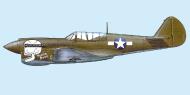
 Curtiss P-40N Warhawk 80FG88FS White 1 Pilot Ivana W. McElroya Burma Banshees, India 1944 00

Profile 01: P-40N-5-CU Olive Drab/Neutral Gray Shadow Shading 80FG88FS W1 Ivana W. McElroya Burma Banshees, India 1944.

 Curtiss P-40N Warhawk 10AF 80FG89FS W49 Burma Banshee 1943-45 01

Photo 01: 'Joanne' number 49 is an interesting shot. Note the drop tank is on backwards. The spinner is extremely dark, so much so that it appears to be Black, but is probably Blue. The wheel cover sports a pair of dice. The spots read 4 and 3 for usual 7. [Bob Gebhardt]

 Curtiss P-40N Warhawk 10AF 80FG89FS White 61 Burma Banshee 1943-45

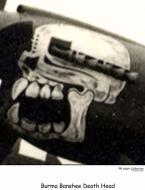
Profile 01: P-40N, 89th Fighter Squadron (80th Fighter Group), India, spring 1944. The 80ths skull emblem sometimes gave some interesting variations like these two jaw bones and eye of a shark, which is no doubt due to the upper panel being replaced following an accident. The same can be said for the maintenance hatch on the Joundel.

 10AF 80FG Burma Banshee being visited by high level delegation in Dinjan India 15th Aug 1944 NA1482

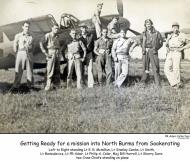
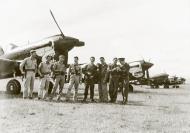
Photo description: Pilots of the 89th Fighter Squadron and 90th Fighter Squadron of the 80th Fighter Group pose front of their Curtiss P-40s at their base in Dinjan, India. They are, left to rights
Lt. Ralph E. Ward, Jr., with two and one half Japs to his credit
Lt. Gale H. Iyon with two Japs to his credit
Lt. J.3. Patton with two Japs to his credit
Flight Officer S.E. Hammer with two Japs to his credit
Lt. R.D. Bell with three Japs to his credit
Lt. P.A. Marshall with two Japs to his credit
Lt. R.B. McReynolds with two Japs to his credit
Lt. H.H. Doughty with three and one half Japs to his credit
15 August 1944. (U.S. Air Force Number 72455AC)

Photo Source: National Archives Identifier NAID: 204961182 Local ID: 342-FH-3A34905-72455AC

 Curtiss P-40N Warhawk 10AF 80FG88FS 75 Sarah II Burma Banshee with Capt Allred Burma 27th Nov 1944 NA358

Photo description: Capt. Allred is the first to insist that his ground crew share in whatever lory may have come his way. Without their expert help in loading bombs and ammunition and in servicing his plane, he couldn't have done the job he did. In this photo, one of the bombs is being loaded from a wing rack. Left to right: Sgt Frederick P. Stevenson, Sidney Ohio; 3/Sgt James T. Robinson, Roslyn, N.Y.; Sgt John J. Keegan, Jersey City, N.J.; Sgt Frank C. Burns, Salt Lake City, Utah; and Sgt Carroll J. Cummings, Ivanhoe, Texas. BURMA (U.S. Air Force Number 55002AC)

Photo Source: National Archives Identifier NAID: 204958329 Local ID: 342-FH-3A33871-55002AC

 Curtiss P-40 Warhawk 10AF 80FG Burma Banshee being rearmed with 250lb bombs at Nagaghuli India NA439

Photo description: Mechanics lift a 250lb bomb to a modified rack tinder the wing of a Curtiss P-40 of the 80th Fighter Group at Nagaghuli, India. In order to utilize the additional bomb capacity, sway braces were designed to accommodate 100 to 500 pound bombs. (U.S. Air Force Number 72660AC)

Photo Source: National Archives Identifier NAID: 204958449 Local ID: 342-FH-3A33913-72660AC

 10AF 80FG Burma Banshee being visited by high level Chinese delegation China 1944 NA

Photo description: HEADQUARTERS, FOURTEENTH AIR FORCE, CHINA — Chinese army officers attending the Chinese General Staff School are1 at a 14th Air Force base somewhere in China, learning coordination methods of air and ground forces. Lecturer with back to camera is a pilot of the 14th Air Force which is giving support to Chinese ground forces. Lt. Colonel William M. Myers, instructor at the school, is facing the camera. 1944. (U.S. Air Force Number 69163AC)

Photo Source: National Archives Identifier NAID: 204833499 Local ID: 342-FH-3A02452-69163AC

Profile 0A: USAAF 42-105264 Curtiss P-40N Warhawk Col Ivan W McElroy CO of 80FG at Tingkawk Sakan Burma 1944. Ivan McElroy commanded the “Burma Banshees,” as the 80th FG was nicknamed, in 1943 and 1944. The unit disrupted Japanese activities along the famous Burma Road and throughout northern Burma. On March 27, 1944, the 80th FG intercepted a raid of 15 bombers and 25 fighters and shot down all but one bomber without suffering any losses of its own. After the war, McElroy remained in service and held a number of staff and command positions, including deputy chief of staff for operations at US Air Force headquarters. On his colorfully painted aircraft, there is a somewhat mysterious spot under the fuel filler cap, whose silhouette somewhat resembles a ghost holding a bomb in its outstretched hand. It appears differently in various photographs. In some cases, it looks as if the paint has been damaged and worn away to the metal, while in others it appears to be just a wet or greasy stain, but it is clear that it has been sooted by the exhaust, so it must have been on the aircraft for some time.

Eduard P-40N WARHAWK ROYAL CLASS DUAL COMBO 1/48 R0025

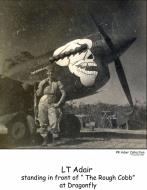
 USAAF 42-105128 Curtiss P-40N Warhawk 10AF 80FG89FS White 44 Philip Adair Lulu Belle Nagaghuli India 0A

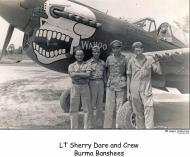
Profile 0A: Philip Reed Adair enlisted in military flight training after the attack on Pearl Harbor. He served with the 80th FG for eighteen months in 1943 and 1944 and flew 139 combat missions. The most remarkable of these took place on December 13, 1943, when he fought alone against a formation of 24 Japanese bombers and 40 fighters. He was credited with one confirmed kill and three other aircraft as damaged, but most importantly, he managed to break up the enemy formation and disrupt the bombing of his own base. He himself was hit several times in this combat and received the Silver Star for his bravery. During this mission, he flew his first Lulu Belle, which was a P-40N-1 Warhawk. The second aircraft of the same name, shown here, was already a P-40N-5 version. Adair received it in early 1944 and on May 17, again fighting against superior forces, he shot down two Oscars. In June 1944, he and the entire group began retraining on Thunderbolts, but he did not achieve any further kills. The 80th FG was called the Burma Banshees, and most of its aircraft were decorated with a skull on the nose. None of them were the same, although they sometimes differed only in details. The primary role of the group was to provide air cover for bases involved in air supply operations to units in China via the Himalayas (Hump operations). Later, from October 1943, the group was tasked with providing air support to units in northern Burma. Philip Adair died at the age of 97 on May 13, 2017.

Eduard P-40N WARHAWK 1/48 https://www.eduard.com/eduard/p-40n-warhawk-1-48-1-2.html


Key Air Battles and Engagements

80th Fighter Group: Overview and WWII P-40 Operations

Constituted as the 80th Pursuit Group (Interceptor) on January 13, 1942, and activated on February 9, 1942, at Selfridge Field, Michigan, the group was redesignated the 80th Fighter Group in May 1942. Equipped primarily with Curtiss P-40 Warhawks (E, K, and N models), it operated in the China-Burma-India (CBI) Theater under the Tenth Air Force, based in India (Assam, Nagpur) and Burma (Myitkyina). Its squadrons—88th, 89th, and 90th Fighter Squadrons—flew approximately 8,000 P-40 sorties, claiming around 150 confirmed aerial victories and destroying hundreds of ground and naval targets. Known as the “Burma Banshees” for their distinctive skull-and-crossbones P-40 markings, the group supported Allied ground operations against Japanese forces in Burma and protected the Burma Road. It earned a Distinguished Unit Citation (DUC) for actions in Burma (1943–1944). The 80th transitioned to P-47 Thunderbolts in mid-1944 but relied heavily on P-40s for its early campaigns.

Training and Deployment (February–September 1942)

Activated under Col. John C. Crosthwaite, the 80th trained at Selfridge Field and Mitchel Field, New York, with P-40Es, focusing on dogfighting, low-level strafing, and navigation. In July 1942, the group deployed to the CBI via Karachi, India, arriving at Assam (Chabua, Dinjan) by September 1942. It flew ~1,200 training and patrol sorties, adapting P-40s for tropical conditions with dust filters and monsoon-resistant systems. Combat reports note 20–25% downtime from mud, humidity, and engine strain, with pilots logging 50–80 hours. Initial missions included patrols over the Assam Valley and escorts for C-47s supplying the Burma Road, with first enemy contact in October 1942.

   Peak Mission Days: Burma and India Campaign (October 1942–June 1943)

The 80th entered combat in October 1942 from Chabua and Dinjan, India, flying P-40Es and Ks. Supporting Allied forces in Burma and defending India, the group flew ~5,000 P-40 sorties, focusing on air intercepts, bomber escorts, and strafing missions against Japanese airfields, supply lines, and troops. Monsoons and jungle terrain caused 15–20% mission aborts. Key days with high mission intensity included:
- December 14, 1942 (Imphal Airfield Defense): ~120 sorties, repelling Japanese raids on Imphal. The 89th FS downed 3 Ki-43 Oscars, losing 2 P-40s to flak. John S. Stewart’s report: "Dived on an Oscar at 6,000 feet—guns shredded it. Flak was relentless." Strafed 8+ targets; 600 rounds per sortie.
- March 28, 1943 (Fort Hertz Raid): ~150 sorties, targeting Japanese positions in northern Burma. The 88th FS claimed 4 Ki-43s and 1 A6M Zero, losing 1 P-40 to fighters. Edward F. Rector’s diary: "Fort Hertz was a jungle hell—hit a Zero diving away. Mud and rain shook my P-40." Destroyed 10+ supply trucks; 500-lb bombs used.
- May 10, 1943 (Myitkyina Airfield Attack): ~180 sorties, peak day, striking Japanese airfields at Myitkyina. The 90th FS downed 3 Zeros and 2 Ki-43s, losing 2 P-40s to flak. Albert J. Baumler’s logbook: "Strafed Myitkyina—hit a Zero on the ground, flak everywhere. Heat was brutal." Destroyed 12+ aircraft; earned DUC.
These days accounted for ~20% of the campaign’s sorties, with 6–10 daily engagements. Combat logs note P-40s’ durability in dives but vulnerability to Zeros’ and Oscars’ agility below 10,000 feet.

   Peak Mission Days: Burma Campaign (July 1943–June 1944)

The 80th moved to bases in Burma (Shingbwiyang, Myitkyina) by mid-1943, flying ~2,500 P-40 sorties to support Allied offensives, including the Ledo Road construction and Merrill’s Marauders. Missions included intercepts over the Irrawaddy River and strafing Japanese supply lines. Notable days included:
- August 20, 1943 (Hukawng Valley Raid): ~140 sorties, targeting Japanese troops in northern Burma. The 88th FS claimed 3 Ki-43s, losing 1 P-40 to flak. Robert T. Smith’s diary: "Dived on an Oscar over the valley—guns hit hard. Monsoon rain blinded us." Destroyed 10+ targets; 600 rounds per sortie.
- December 2, 1943 (Rangoon Air Raid): ~160 sorties, escorting B-24s over Rangoon. The 89th FS downed 4 Zeros, losing 2 P-40s to fighters. John S. Stewart’s report: "Rangoon skies swarmed—nailed a Zero, flak punched my wing. P-40 held tough." Strafed 8+ targets; 500-lb bombs used.
- March 17, 1944 (Shaduzup Offensive): ~150 sorties, supporting Allied ground advances in Burma. The 90th FS claimed 3 Ki-43s, losing 1 P-40. William D. Turner’s logbook: "Strafed Shaduzup—hit supply lines, flak everywhere. P-40’s armor saved me." Destroyed 12+ targets; earned DUC.
These days saw 15–20% of monthly sorties, with 25% using bombs and 600–800 rounds per sortie. Monsoons and jungle conditions caused 15% mission aborts, per combat logs.

Pilot Stories and Diary Excerpts

Pilot diaries and accounts, preserved in the USAF Historical Research Agency and works like *Aces of the Southwest Pacific* by Gene Gurney, offer vivid insights into the 80th’s P-40 operations in the CBI’s grueling conditions. These narratives highlight combat intensity, tropical challenges, and the Banshees’ skull markings:
- John S. Stewart (89th Fighter Squadron): Scored 6 kills in P-40s, including 2 on December 2, 1943. Diary (USAF archives): "Rangoon was chaos—dove on a Zero, guns blazing. Flak and heat nearly killed me." Notes malaria’s toll; earned DFC and Silver Star, survived war.
- Edward F. Rector (88th Fighter Squadron): AVG veteran, downed 5 aircraft in P-40s, including 2 on March 28, 1943. Logbook: "Fort Hertz was a jungle mess—hit an Oscar, monsoon rain blinded us. P-40’s tough." Mentions ground crew patching planes in mud; earned DFC, survived war.
- Albert J. Baumler (90th Fighter Squadron): Scored 4 kills in P-40s, including 2 on May 10, 1943. Diary: "Myitkyina airfield burned—hit a Zero, flak shook my cockpit. Skull markings scared them." Notes AVG tactics’ influence; earned DFC, survived war.
- Robert T. Smith (88th Fighter Squadron): AVG veteran, scored 5 kills in P-40s, including 2 on August 20, 1943. Journal: "Hukawng Valley was wild—dove on an Oscar, guns hit hard. Heat and dust were brutal." Highlights crew repairing bullet holes; earned Air Medal, survived war.
- William D. Turner (90th Fighter Squadron): Downed 3 Ki-43s in P-40s, including 1 on March 17, 1944. Report: "Shaduzup skies swarmed—nailed an Oscar, flak everywhere. P-40 took hits but flew." Earned DFC and Purple Heart; survived war.
Diaries, often 5–12 pages monthly, detail physical strain (malaria, heat exhaustion), fear of flak and Zeros, and reliance on ground crews working in monsoons.

Combat Statistics and Reports

From 1942–1944, the 80th claimed ~150 aerial kills (80 A6M Zeros, 60 Ki-43 Oscars/Ki-44 Tojos, 10 others) and ~1,800 ground/naval targets (airfields, trucks, barges). Combat losses totaled ~50 P-40s (35 to enemy action, 15 to accidents/weather), with ~25 pilots KIA/MIA. Kill ratios averaged 2.5:1 in 1942–1943, dropping to 2:1 in 1944 as Japanese pilots improved. Combat reports (*The Army Air Forces in World War II: Vol. V*) note P-40s diving at 350–400 mph to counter Zeros’ agility, with six .50-caliber guns expending 600–800 rounds per sortie. Maintenance logs show 20–25% downtime from mud and humidity, with 15% of sorties aborted. The group’s 8,000 P-40 sorties had a 0.6% loss rate, reflecting effective tactics.

Transition and Legacy

The 80th transitioned to P-47 Thunderbolts in mid-1944, phasing out P-40s for longer-range missions in Burma and India. It flew ~4,000 sorties in 1944–1945, claiming 50+ kills, supporting the Burma Campaign’s final push. Inactivated on November 7, 1945, in India, the group’s P-40 era, marked by the “Burma Banshees” skull markings and aces like Stewart and Rector, was critical to CBI victories. Its DUC for 1943–1944 reflects its impact.

Sources: Relied on The Army Air Forces in World War II: Vol. V, Aces of the Southwest Pacific by Gene Gurney, Burma Air Campaign by Christopher Shores, and USAF Historical Research Agency records for accuracy. For further reading, *The Army Air Forces in World War II: Vol. V*, *Aces of the Southwest Pacific* by Gene Gurney, and *Burma Air Campaign* by Christopher Shores provide detailed accounts.

80th Pursuit Squadron - 49th Fighter Group

80th Fighter Group

80th Fighter Group

Constituted as 80th Pursuit Group (Interceptor) on 13 Jan 1942. Activated on Feb 1942. Redesignated 80th Fighter Group in May 1942. Used P-47's to train for combat and to serve as part of the defense force for the northeastern US. Sailed for India, via Brazil, Cape of Good Hope, and Ceylon, in May 1943. Assigned to Tenth AF. Began operations in Sep 1943 with P-38 and P-40 aircraft; later used P-47's. Supported Allied ground forces during the battle for northern Burma and the push southward to Rangoon, bombing and strafing troop concentrations, supply dumps, lines of communication, artillery positions, and other objectives. Defended the Indian terminus of the Hump route by striking Japanese airfields and by patrolling Allied airfields to safeguard them from attack. Received a DUC for intercepting a formation of enemy planes and preventing its attack on a large oil refinery in Assam, India, on 27 Mar 1944. Returned to the US in Oct 1945. Inactivated on 3 Nov 1945.

USAAF 88th Fighter Squadron USAAF 89th Fighter Squadron USAAF 90th Fighter Squadron USAAF 459th Fighter Squadron

88th FS  -  89th FS  -  90th FS  -  459th FS

Squadrons. 88th: 1942-1945. 89th: 1942-1945. 90th: 1942-1945. 459th: 1943-1944.

Stations. Selfridge Field, Mich, 9 Feb 1942; Farmingdale, NY, 5 Jul 1942; Mitchel Field, NY, 9 Mar-30 Apr 1943; Karachi, India, 28 Jun 1943; Nagaghuli, India, Oct 1943; Tingkawk Sakan, Burma, 29 Aug 1944; Myitkyina, Burma, 20 Jan 1945; Dudhkundi, India, 24 Maya Oct 1945; Camp Kilmer, NJ, 1-3 Nov 1945.

Commanders. Unkn, Feb-May 1942; Col John C Crosthwaite, c. 20 May 1942; Maj Albert L Evans Jr, 1 Jul 1942; Col Ivan W McElroy, 14 Jul 1943; Col Albert L Evans Jr, 13 Apr 1944; Col Sydney D Grubbs Jr, 1 Feb 1945; Col Hiette S Williams Jr, c. 29 Apr 1945-unkn.

Campaigns. American Theater; India-Burma; Central Burma.

Decorations. Distinguished Unit Citation: Assam, India, 27 Mar 1944.

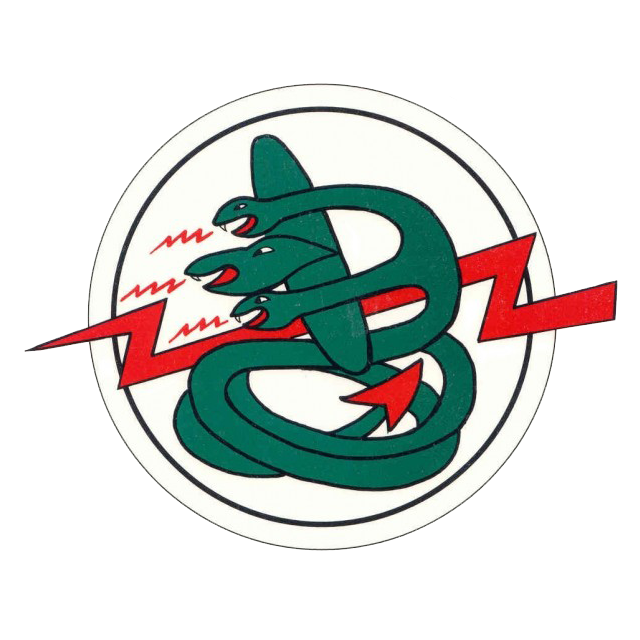
Insigne Shield: Per bend azure and sable a bend raguly or. Motto: Angels On Our Wings. (Approved 14 Oct 1942.)

 Curtiss P-40 Warhawk and Kittyhawk
 

   IL-2 Sturmovik 'Cliff's of Dover' Blitz

   IL-2 Sturmovik Battle of Stalingrad

   DCS World - has no 3D model


 Sookerating, Sokriting T.E. 40 Wl, Assam, India Map


    Bibliography: +

  • Alexander, Kristin. Clive Caldwell: Air Ace. Crows Nest, NSW: Allen & Unwin, 2006. ISBN 1-74114-705-0.
  • Angelucci, Enzo and Paolo Matricardi. World Aircraft: World War II, Volume II (Sampson Low Guides). Maidenhead, UK: Sampson Low, 1978. ISBN 0-562-00096-8.
  • Arena, Nino. Macchi 205 "Veltro" (in Italian). Modena: Stem Mucchi Editore, 1994.
  • Berliner, Don. Surviving Fighter Aircraft of World War Two: Fighters. London: Pen & Sword Aviation, 2011. ISBN 978-1-8488-4265-6.
  • Boyne, Walter J. Clash of Titans. New York: Simon & Schuster, 1994. ISBN 0-671-79370-5.
  • Boyne, Walter J. and Michael Fopp. Air Warfare: An International Encyclopedia. Santa Barbara, California: ABC-CLIO, 2002. ISBN 1-57607-345-9.
  • Bowers, Peter M. Curtiss Aircraft, 1907–1947. London: Putnam & Company Ltd., 1979. ISBN 0-370-10029-8.
  • Bowers, Peter M. and Enzo Angellucci. The American Fighter. New York: Orion Books, 1987. ISBN 0-517-56588-9.
  • Brown, Russell. Desert Warriors: Australian P-40 Pilots at War in the Middle East and North Africa, 1941–1943. Maryborough, Australia: Banner Books, 1983. ISBN 1-875593-22-5.
  • Coyle, Brendan. War on Our Doorstep: The Unknown Campaign on North America's West Coast. Victoria, BC: Heritage House Publishing Co. Ltd., 2002. ISBN 978-1-894384-46-9.
  • Crawford, Jerry L. Messerschmitt BF 110 Zerstörer in action. Carrollton, Texas: Squadron/Signal Publications, 1977. ISBN 0-89747-029-X.
  • Dean, Francis H. America's Hundred Thousand. Atglen, Pennsylvania: Schiffer Publishing Ltd., 1997. ISBN 0-7643-0072-5.
  • Donald, David, ed. "Curtiss Model 81/87 (P-40 Warhawk)"Encyclopedia of World Aircraft. Etobicoke, Ontario, Canada: Prospero, 1997. ISBN 1-85605-375-X.
  • Drabkin, Artem. The Red Air Force at War: Barbarossa and the Retreat to Moscow – Recollections of Fighter Pilots on the Eastern Front. Barnsley, South Yorkshire, UK: Pen & Sword Military, 2007. ISBN 1-84415-563-3.
  • Ford, Daniel. Flying Tigers: Claire Chennault and His American Volunteers, 1941-1942. Washington, D.C.: HarperCollins|Smithsonian Books, 2007. ISBN 0-06-124655-7.
  • Ethell, Jeffrey L. and Joe Christy. P-40 Hawks at War. Shepperton, UK: Ian Allan Ltd., 1979. ISBN 0-7110-0983-X.
  • Ford, Daniel. 100 Hawks for China: The Story of the Shark-Nosed P-40 That Made the Flying Tigers Famous. Warbird Books, 2014
  • Glancey, Jonathan. Spitfire: The Illustrated Biography. London: Atlantic Books, 2006. ISBN 978-1-84354-528-6.
  • Gordon, Yefim. Soviet Air Power in World War 2. Hinckley, Leicestershire, UK: Midland Ian Allan Publishing, 2008. ISBN 978-1-85780-304-4.
  • Green, William. War Planes of the Second World War, Volume Four: Fighters. London: MacDonald & Co. (Publishers) Ltd., 1961 (Sixth impression 1969). ISBN 0-356-01448-7.
  • Green, William and Gordon Swanborough. WW2 Aircraft Fact Files: US Army Air Force Fighters, Part 1. London: Macdonald and Jane's Publishers Ltd., 1977. ISBN 0-356-08218-0.
  • Gunston, Bill. Gli aerei della 2a Guerra Mondiale. Milan: Alberto Peruzzo Editore, 1984.
  • Gunston, Bill, ed. The Illustrated History of Fighters. New York, New York: Exeter Books Division of Simon & Schuster, 1981. ISBN 0-89673-103-0.
  • Hardesty, Von. Red Phoenix: The Rise of Soviet Air Power 1941–1945. Washington, D.C.: Smithsonian Institution, 1982. ISBN 0-87474-510-1.
  • Higham, Robin. Flying American Combat Aircraft of WW II. Manhattan, Kansas: Sunflower University Press, 2004. ISBN 0-8117-3124-3.
  • Horn, Alex. Wings Over the Pacific: The RNZAF in the Pacific Air War. Auckland, NZ: Random House New Zealand, 1992. ISBN 1-86941-152-8
  • Johnsen, F.A. P-40 Warhawk (Warbird History). St. Paul, Minnesota: Motorbooks International, 1999. ISBN 0-7603-0253-7
  • King, John. The Whole Nine Yards: The Story of an Anzac P-40. Auckland, NZ: Reed Books, 2002. ISBN 0-7900-0835-1. (A P-40 with No. 75 Squadron RAAF)
  • Kinzey, Bert. Attack on Pearl Harbor: Japan Awakens a Sleeping Giant. Blacksburg, Virginia: Military Aviation Archives, 2010. ISBN 978-0-9844665-0-4.
  • Lavigne, J.P.A. Michel and James F. Edwards. Kittyhawk Pilot. Battleford, Saskatchewan, Canada: Turner-Warwick, 1983. ISBN 0-919899-10-2.
  • Matricardi, Paolo. Aerei Militari: Caccia e Ricognitori - Volume 1 (in Italian). Milan: Electa Mondadori, 2006.
  • McDowell, Earnest R. Famous Aircraft: The P-40 Kittyhawk. New York: ARCO Publishing Company, 1968.
  • Mellinger, George. Soviet Lend-Lease Fighter Aces of World War 2 (Osprey Aircraft of the Aces No. 74). Oxford, UK: Osprey Publishing, 2006. ISBN 1-84603-041-2.
  • Merriam, Ray. U. S. Warplanes of World War II. Bennington, Virginia: Merriam Press, 2000. ISBN 1-57638-167-6.
  • Molesworth, Carl. P-40 Warhawk Aces of the MTO (Osprey Aircraft of the Aces No. 43). London: Osprey Publishing, 2002. ISBN 1-84176-288-1.
  • Molesworth, Carl. P-40 Warhawk Aces of the Pacific (Aircraft of the Aces). London: Osprey Publishing, 2003. ISBN 1-84176-536-8.
  • Molesworth, Carl. P-40 Warhawk Aces of the CBI(Osprey Aircraft of the Aces No. 35). Oxford, UK: Osprey Publishing, 2000. ISBN 1-84176-079-X.
  • Molesworth, Carl. P-40 Warhawk vs Ki-43 Oscar: China 1944–45. Oxford, UK: Osprey Publishing, 2008. ISBN 1-84603-295-4.
  • Müller, Rolf-Dieter. Der Bombenkrieg 1939–1945 (in German). Berlin: Links Verlag, 2004. ISBN 3-86153-317-0.
  • Murphy, Justin D. and Matthew A. McNiece. Military aircraft, 1919-1945: An Illustrated History of their Impact. Santa Barbara, California: ABC-CLIO, 2009. ISBN 978-1-85109-498-1.
  • Neulen, Hans Werner. In the Skies of Europe: Air Forces Allied to the Luftwaffe, 1939–1945 Ramsbury, Marlborough, UK: The Crowood Press, 2005. ISBN 1-86126-799-1.
  • Pentland, Geoffrey. The P-40 Kittyhawk in Service. Melbourne, Victoria, Australia: Kookaburra Technical Publications Pty. Ltd., 1974. ISBN 0-85880-012-8.
  • Snedden, Robert. World War II Combat Aircraft. Bristol, UK: Factfinders Parragon, 1997. ISBN 0-7525-1684-1.
  • Rudge, Chris. Air-To-Air: The Story Behind the Air-to-Air Combat Claims of the RNZAF. Lyttelton, Canterbury, New Zealand: Adventure Air, 2003 ISBN 0-473-09724-9.
  • Scott, Robert L. Damned to Glory. New York: Scribner's, 1944. No ISBN.
  • Scutts, Jerry. Bf 109 Aces of North Africa and the Mediterranean. London: Osprey Publishing, 1994. ISBN 1-85532-448-2.
  • Shamburger, Page and Joe Christy. The Curtiss Hawk Fighters. New York: Sports Car Press Ltd., 1971. ISBN 0-87112-041-0.
  • Shores, Christopher and Hans Ring. Fighters over the Desert. London: Neville Spearman Limited, 1969. ISBN 0-668-02070-9.
  • Shores, Christopher and Clive Williams. Aces High: A Further Tribute to the Most Notable Fighter Pilots of the British and Commonwealth Air Forces in WWII, v. 2. London: Grub Street, 1994. ISBN 1-898697-00-0.
  • Thomas, Andrew. Tomahawk and Kittyhawk Aces of the RAF and Commonwealth. London: Osprey Books, 2002. ISBN 1-84176-083-8.
  • United States Air Force Museum Guidebook. Wright-Patterson AFB, Ohio: Air Force Museum Foundation, 1975.
  • Vader, John. Pacific Hawk. London: MacDonald & Co, 1970.
  • Weal, John. Jagdgeschwader 27 'Afrika' . Oxford, UK: Osprey, 2003. ISBN 1-84176-538-4.

    Magazines: +

  • Airfix Magazines (English) - http://www.airfix.com/
  • Avions (French) - http://www.aerostories.org/~aerobiblio/rubrique10.html
  • FlyPast (English) - http://www.flypast.com/
  • Flugzeug Publikations GmbH (German) - http://vdmedien.com/flugzeug-publikations-gmbh-hersteller_verlag-vdm-heinz-nickel-33.html
  • Flugzeug Classic (German) - http://www.flugzeugclassic.de/
  • Klassiker (German) - http://shop.flugrevue.de/abo/klassiker-der-luftfahrt
  • Le Fana de L'Aviation (French) - http://boutique.editions-lariviere.fr/site/abonnement-le-fana-de-l-aviation-626-4-6.html
  • Le Fana de L'Aviation (French) - http://www.pdfmagazines.org/tags/Le+Fana+De+L+Aviation/
  • Osprey (English) - http://www.ospreypublishing.com/
  • Revi Magazines (Czech) - http://www.revi.cz/

    Web References: +

  • Wikipedia.org - https://en.wikipedia.org/wiki/Curtiss_P-40_Warhawk
  • Military Aviation Museum - https://www.militaryaviationmuseum.org/aircraft/curtiss-p-40/

Come and visit my other site 4U2C.life and book a tarot reading wih me!

This webpage was updated 24th Octber 2025

-xxx-